· game-modes · 6 min read
Narrated Room is Live — Now Your Wolves Have a Professional Storyteller
Say goodbye to flat "I am a villager" claims. The new Narrated Room treats every game like a primetime drama, with a real-time narrator who describes your actions, reads the room, and announces the blood-soaked plot twists as they happen.
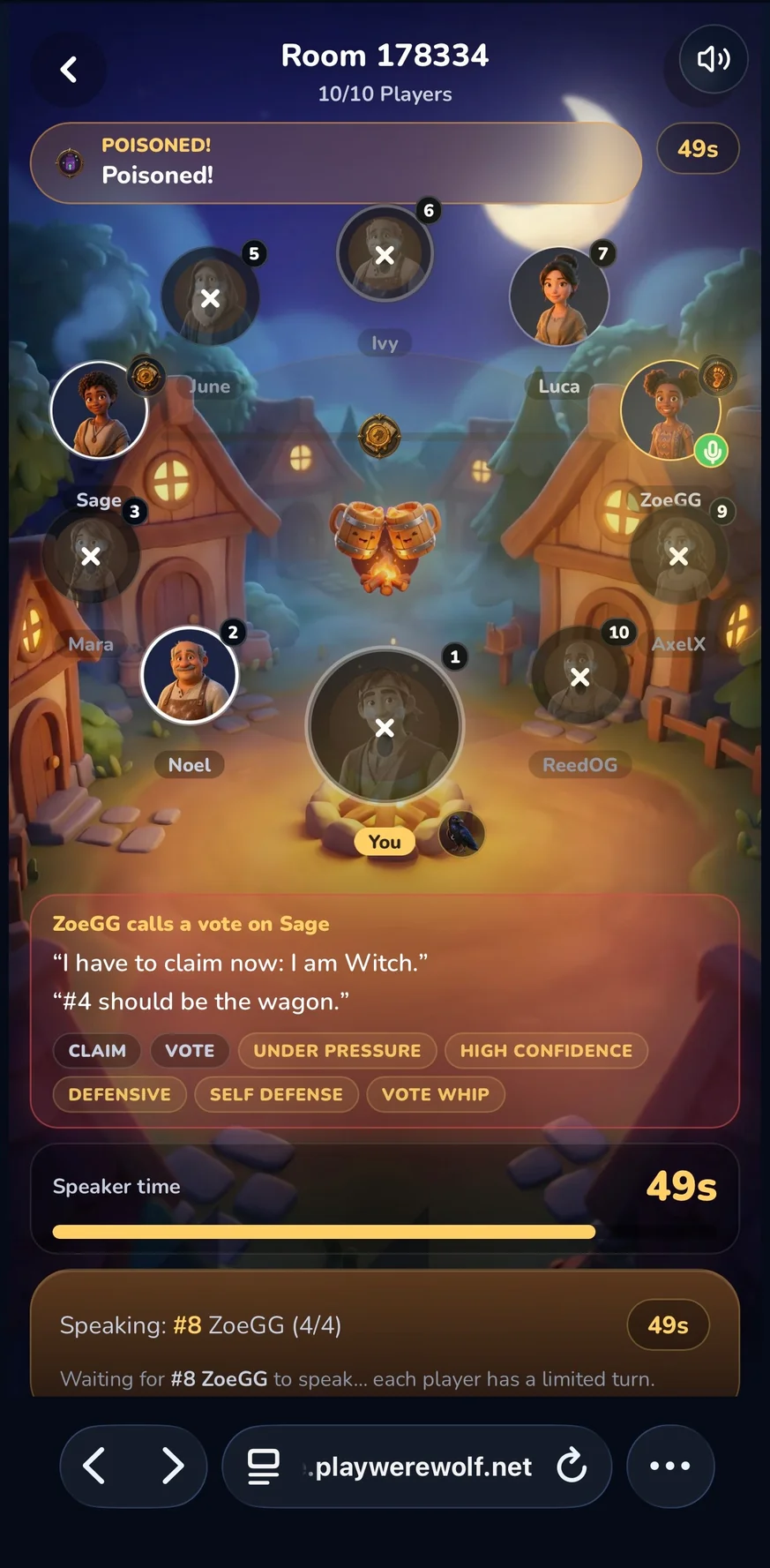
Picture this: it’s Day 3. There are four of you left. Two are definitely wolves. The Witch’s potion is somewhere. The Seer is either dead, lying, or a wolf pretending to be a dead Seer. Everyone is screaming. The vote is about to be called, and the timer is ticking down. You’re sweating.
Now imagine the same moment — but with a smooth, slightly ominous voiceover saying:
“The village square falls silent. Player 7 stares at Player 3. Player 3 stares back. Somewhere, a wolf adjusts its mask. The clock strikes 30 seconds until judgment…”
Yeah. That’s the new Narrated Room.
What Even Is a Narrated Room?
Narrated Room is a new game mode that adds a real-time AI narrator to your game. The narrator doesn’t play — they describe. They set the scene. They react to what you do. They announce deaths with gravitas, suspicion with style, and victories with the kind of theatrical flair that makes a Tuesday night game feel like the season finale of your favorite murder show.
Think of it as the difference between watching a soccer game on a cold field with no commentary versus watching the same game with a professional play-by-play announcer who tells you why that pass mattered.
The Three Things the Narrator Actually Does
1. Human-Sized Monologues (Yes, Plural)
Every time you perform a meaningful action — claiming a role, casting a vote, defending yourself, accusing someone, dying — the narrator will describe it. Not in bullet points. In actual paragraphs. With context. With body language. With dramatic timing.
For example, instead of the game just saying “Player 3 was eliminated,” the narrator will drop something like:
“Player 3 crumples to the ground, the Vote tally carved into the wood beside them like a headstone. Their last words — a half-uttered claim, a name caught in their throat — are silenced by the rising wind. The village lowers their torches. Someone, somewhere, is breathing a little easier. Someone else is not.”
This isn’t flavor text. This is the game treating your choices like they mattered — because they did.
2. A Persistent Narrator (The Voice in Your Head)
The Narrator stays with you from the very first night phase to the very last vote. They remember things. They’ll call back to that lie Player 6 told on Day 1 when Player 6 suddenly claims to be the Seer on Day 4. They’ll quietly mention that “the night was unusually quiet” when no one died. They’ll drop hints about the mood of the room — the hesitation, the panic, the calm-before-the-storm silence that always means a werewolf is about to make their move.
It’s not omniscient. The narrator doesn’t know who the wolves are. But they read the table. And they narrate what they see.
3. Event Broadcasts (Aka “Breaking News from the Village Square”)
Whenever something dramatic happens — a Seer reveal, a Hunter’s revenge shot, the Witch’s first poison, a controversial vote, a wolf getting caught in a lie — the narrator drops a special broadcast:
EVENT: The Witch has chosen. Player 9 drinks the blue potion. By morning, no one remembers why they trusted them in the first place.
These are formatted differently from regular narration. Bigger. Bolder. With a little audio sting (because yes, there’s audio too). They’re designed to make the key moments land with the weight they deserve.
Narrated Room vs. Classic Room: What’s the Difference?
Great question. Here’s the honest breakdown:
| Aspect | Classic Room | Narrated Room |
|---|---|---|
| Game length | ~15–25 minutes | ~20–35 minutes (a bit longer for the monologue juice) |
| Pacing | Fast, terse, get-to-the-vote | Slower, more deliberate, more flavorful |
| Best for | Pure logical deduction | Drama, storytelling, memorable moments |
| Information density | High — every second matters | Medium — flavor competes with facts |
| Player fatigue | Low — short bursts | Medium — you’re getting a whole show |
| Replayability | High (fast, repeat-friendly) | High (each game tells a different story) |
| Wolf advantage | Standard | Slightly higher (extra flavor = extra cover) |
| Vibe | Poker night | True crime podcast |
When to Play Classic Room
Classic is your chess match. Every claim is a calculated risk. Every vote is a Bayesian update. You should play Classic when:
- You want a quick, no-nonsense deduction game
- Your group is the “shut up and vote” type
- You’re testing a new player on the rules
- You only have 15 minutes before someone has to leave
Classic is efficient. Classic is clean. Classic is a Swiss watch.
When to Play Narrated Room
Narrated is your prestige TV drama. Every death has weight. Every claim has consequences. Every lie is a story. You should play Narrated when:
- You want the game to feel like something, not just be something
- You have a group that enjoys roleplay, voice acting, or “the bit”
- It’s a special occasion (birthday, reunion, end-of-month game night)
- You want to create a memory, not just a result
Narrated is theatrical. Narrated is messy. Narrated is the reason you’ll text your friend at 2 a.m. saying “Remember when the narrator called me out for hesitating before the vote? I still think about that.”
A Real Moment from a Narrated Game
Here’s an actual snippet from a beta test. Player 4 had been suspiciously quiet for two full days. No claims. No votes of substance. Just a quiet “no comment” every time the Seer was demanded. On Day 4, the Seer finally outed them as a wolf.
The narrator’s event broadcast was:
THE MASK FALLS. Player 4 — quiet, careful, smiling Player 4 — is dragged into the square. Their pockets reveal nothing but a half-eaten muffin and a truly pathetic alibi. The village votes. The fire crackles. By morning, only the memory of their silence remains.
The player in question (a real human, beta tester, very good sport) said afterward: “I’ve never felt so personally victimized by a computer program. Also, the muffin line is sending me.”
That’s the energy.
How to Try It
Narrated Room is rolling out today to all players. To give it a spin:
- Head to game.playwerewolf.net
- Click Create Room and select Narrated Room from the mode list
- Round up your most dramatic friends (humans only — bots don’t appreciate the arts)
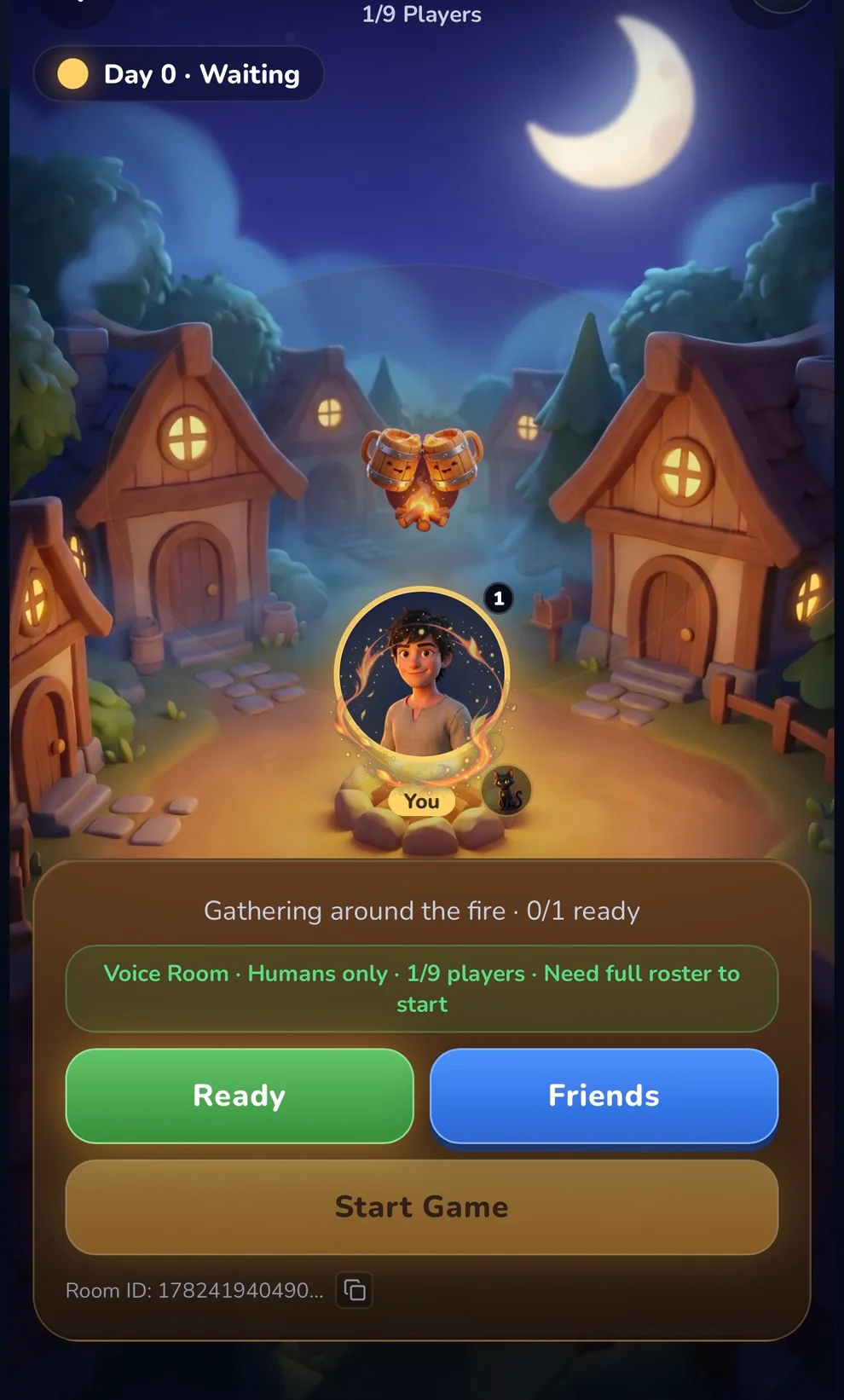
- Hit ready, take a deep breath, and wait for the narrator to introduce the scene
“Ten villagers. One moon. A village that does not yet know what sleeps beside it. Let the game begin.”
A Note from the Team
We built Narrated Room because we love Werewolf — but we also love stories. The pure-logic Classic mode will always be there for the spreadsheet crowd. Narrated is for everyone who has ever finished a game and immediately wanted to tell someone about that one perfect moment. The wolf who pretended to be a drunk villager. The Seer who got poisoned before the reveal. The Hunter who took down the wrong person and lived with the consequences.
Those moments are the soul of this game. Narrated Room just makes sure you remember them.
Now go gather around the fire. The narrator is waiting.